Panoramic view of the Singapore skyline at sunset

A*STAR · Singapore

Research Scientist

Advancing mental health through rigorous, open, and equitable science — with a focus on non-pharmacological interventions for stress, mood, and sleep.

Get in Touch
Professional headshot of Alessandro Sparacio

About Me

Mental Health & Cognition

Clinical Trials

Digital Biomarkers

Mindfulness

As a Research Scientist at A*STAR, I am dedicated to advancing mental health research, with a focus on cognition, mood, and stress.

A cornerstone of my career has been leading a large-scale project on self-administered mindfulness. Our findings, published in Nature Human Behaviour, demonstrated that mindfulness significantly reduces stress.

This work has led to opportunities like being a Keynote Speaker at the 4th Annual International Conference of Thai Clinical Psychologists and an invitation to present at the Global Young Scientists Summit (GYSS) 2025.

My doctoral research at Université Grenoble Alpes and Swansea University involved two comprehensive meta-analyses, identifying critical gaps that my multi-site study aimed to address. Since joining A*STAR, I have expanded my expertise into clinical trials and digital biomarkers, leading a decentralized pilot trial using Heart Rate Variability (HRV) to measure stress.

I earned my Ph.D. with distinction for excellence in work and exemplary Open Science practices, building upon a Master's in Social and Occupational Psychology.

Featured Project

Current research initiatives in mindfulness science.
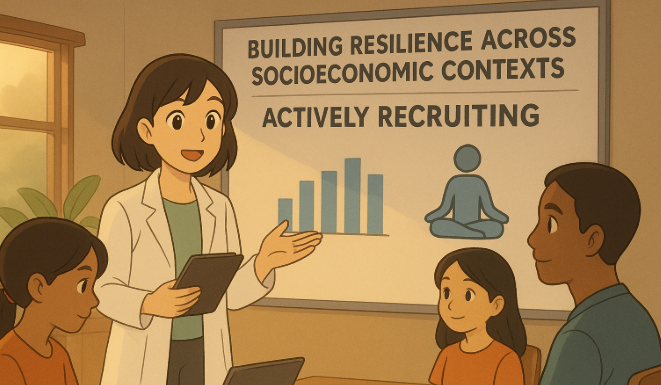
Recruitment graphic for mindfulness research study
NMRC-Funded In Progress

Building Resilience Across Socioeconomic Contexts

As Principal Investigator on this NMRC-funded study, I am testing different mindfulness training structures to discover the optimal way to reduce stress. A key goal is to ensure health equity by recruiting a diverse, international sample.

Featured Presentation

My "Quickfire Pitch" at the Global Young Scientists Summit (GYSS) 2025.

Events

Upcoming

Seminar at Università Cattolica - Milano
Upcoming

Advancing Mindfulness Research: Open Tools, Multi-site Designs, and Methodological Rigor

26 May 2026
14:30 – 16:30 CET
Largo A. Gemelli, 1 – Aula G.001 Bontadini

Building on evidence in Nature Human Behaviour, this talk introduces a new RCT involving 20+ global sites, integrating HRV biomarkers and prioritizing health equity across diverse populations.

Past

Workshop poster for the Replication Crisis in Science
Past

Workshop – The Replication Crisis in Science and Medicine

2 October 2025
2–5pm SGT
Singapore

A workshop at NUS Medicine discussing the challenges of the replication crisis and how embracing reproducibility can strengthen scientific progress in Singapore.

Poster for the Manchester Mindfulness Festival
Past

Brief Mindfulness for Real-Life Stress Relief: Evidence from a Multi-Site Study

30 August 2025
10–11am UK
Online

A talk at The Manchester Mindfulness Festival exploring findings from a large-scale study on the practical applications of brief mindfulness exercises.

Featured Publications

Graphical abstract for JMIR publication
JMIR Mental Health 2025 Pilot RCT

Feasibility of a Smartphone-Delivered Mindfulness Intervention

The Gist:

Is it the mindfulness, or is it just the placebo effect? This study used a sham control to see what's really behind the stress-reducing benefits of digital wellness apps.

View Publication →
Graphical abstract for Nature Human Behaviour publication
Nature Human Behaviour 2024 Multi-Site Study

Self-administered mindfulness interventions reduce stress

The Gist:

Mindfulness apps are everywhere, but do they actually work for stress? We tested four common exercises on over 2,200 people to find out.

View Publication →
Graphical abstract for Collabra: Psychology publication
Collabra: Psychology 2023 Meta-Analysis

Stress regulation via being in nature and social support

The Gist:

Which is a more reliable stress buster: a walk in the park or a talk with a friend? Our meta-analysis of the scientific literature revealed a clear winner.

View Publication →

Interviews & Press

A feature in A*STAR Research detailing our large-scale, multi-site study that explored the effectiveness of brief, self-administered mindfulness exercises for stress reduction.

Read Article →

An interview discussing the findings of our multi-site study on the effectiveness of mindfulness for stress reduction.

Read Article →

A discussion about our research on self-administered mindfulness interventions and their impact on stress.

Read Article →

60-Second Stress Reset

Try a structured breathing exercise grounded in peer-reviewed evidence.

Slow, controlled breathing activates the parasympathetic nervous system — the body's "rest and digest" pathway — by stimulating the vagus nerve. This shifts autonomic balance away from the fight-or-flight response, lowering heart rate and blood pressure within minutes.

Box Breathing (4-4-4-4) uses equal-duration phases of inhalation, hold, exhalation, and hold. A Stanford RCT (N=108) found that daily 5-minute box breathing significantly reduced state anxiety (p<0.0001) and negative affect over 28 days, with effects comparable to mindfulness meditation (Balban et al., 2023, Cell Reports Medicine).

4-7-8 Breathing — adapted from the yogic practice of pranayama — emphasises a prolonged exhalation, extending the exhale-to-inhale ratio. In a study of 43 healthy adults, 4-7-8 practice immediately increased high-frequency HRV (a marker of vagal tone) and significantly reduced heart rate and systolic blood pressure (Vierra et al., 2022, Physiological Reports). A separate RCT with 90 post-surgical patients found it reduced clinical anxiety more effectively than standard deep breathing (Aktaş & İlgin, 2023, Obesity Surgery).

References

Balban, M. Y. et al. (2023). Brief structured respiration practices enhance mood and reduce physiological arousal. Cell Reports Medicine, 4(1), 100895. doi:10.1016/j.xcrm.2022.100895
Vierra, J., Boonla, O., & Prasertsri, P. (2022). Effects of sleep deprivation and 4-7-8 breathing control on heart rate variability, blood pressure, blood glucose, and endothelial function in healthy young adults. Physiological Reports, 10(13), e15389. doi:10.14814/phy2.15389
Aktaş, G. K. & İlgin, V. E. (2023). The effect of deep breathing exercise and 4-7-8 breathing techniques applied to patients after bariatric surgery on anxiety and quality of life. Obesity Surgery, 33(3), 920–929. doi:10.1007/s11695-022-06405-1
Press Start
0:00